Decoding Algorithmic Adjustments in Live Event Odds Driven by Social Media Sentiment Across Platforms
Carlo Werner · Aug 27, 2026
Decoding Algorithmic Adjustments in Live Event Odds Driven by Social Media Sentiment Across Platforms
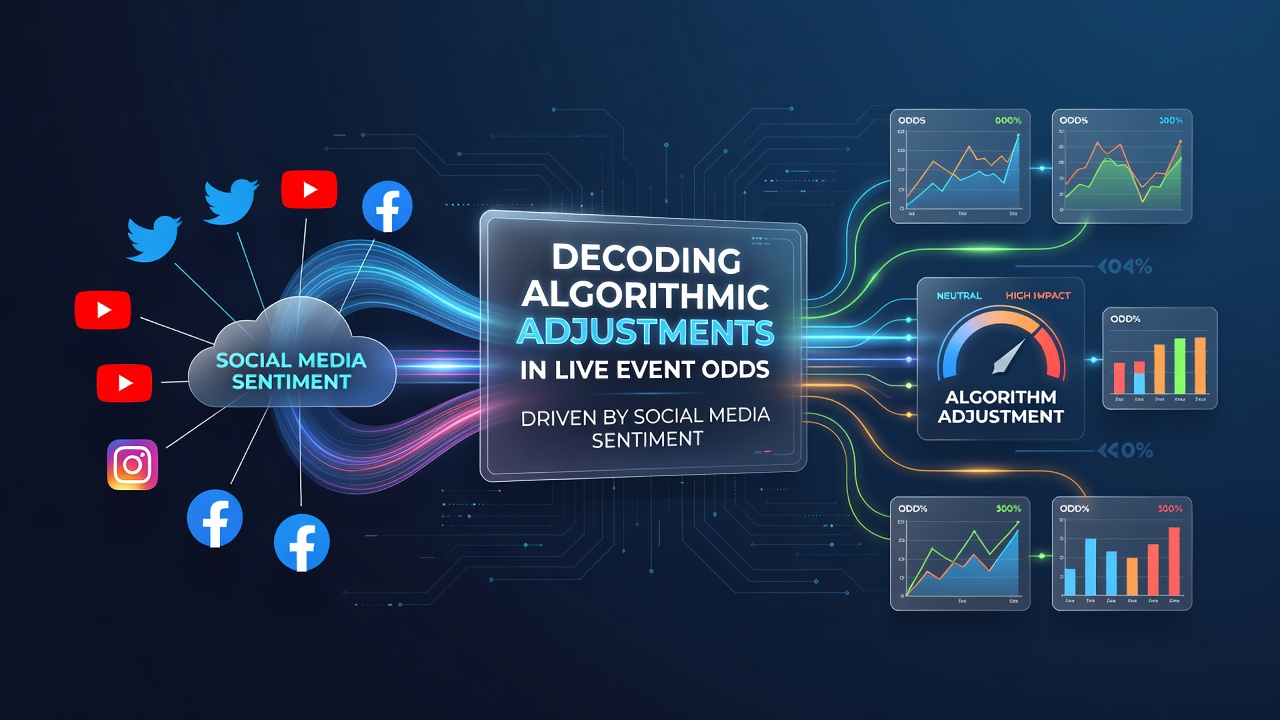
Data from major sportsbooks shows that real-time odds adjustments now incorporate sentiment signals extracted from social media posts across platforms including X, Instagram, TikTok, and Reddit, with processing pipelines updating probabilities within seconds of detected shifts in public mood.
How Sentiment Analysis Feeds into Live Odds Engines
Betting operators deploy natural language processing models that scan millions of posts during live events, scoring language for positive or negative polarity while factoring in volume spikes and geographic clustering, and these scores then trigger automated recalibrations in the underlying probability matrices that set odds for outcomes such as next goal, point spread, or match winner.
Researchers at academic institutions have documented how convolutional neural networks and transformer-based architectures classify short-form content in milliseconds, allowing systems to distinguish between genuine fan excitement and coordinated promotional activity that might otherwise distort market signals.
Platform-Specific Data Streams and Their Weighting
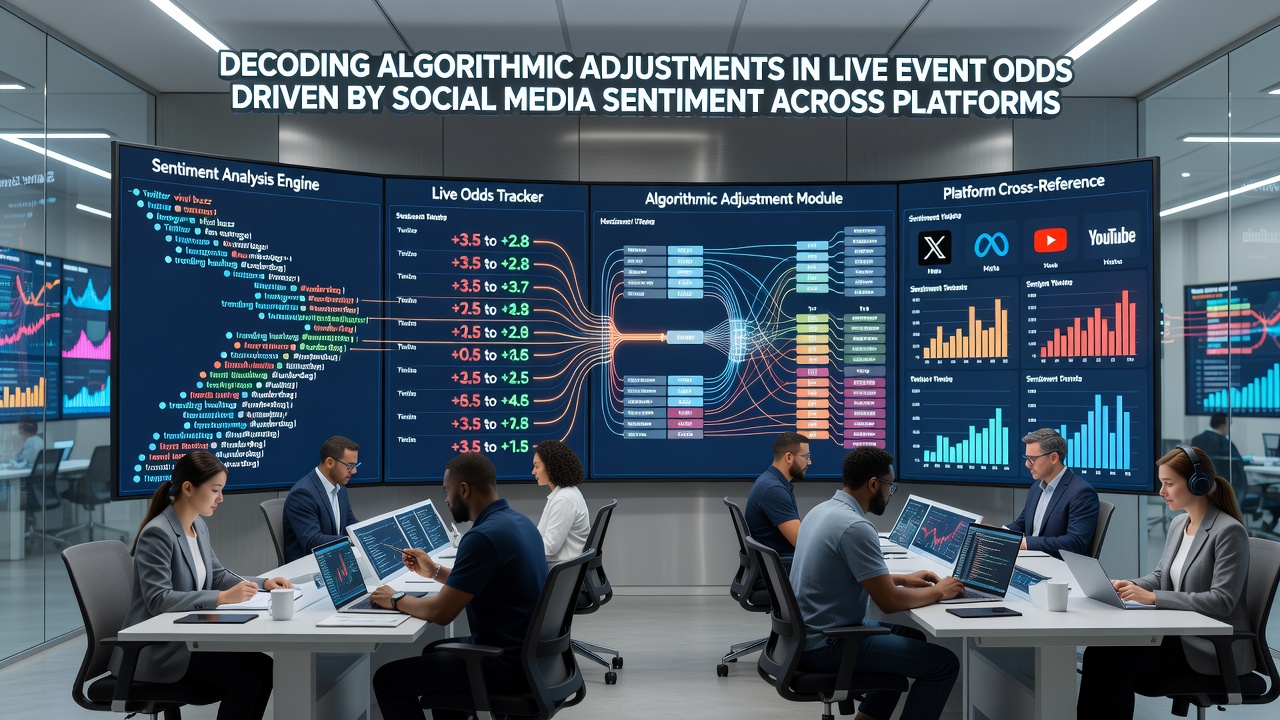
Each social platform contributes distinct signal types: X supplies rapid textual bursts and hashtag momentum, Instagram provides visual context through image captions and story reactions, while TikTok yields short video sentiment that algorithms parse for audio tone and text overlays. Operators apply differential weighting based on historical accuracy during past events, with studies indicating that combined multi-platform feeds reduce prediction error rates by measurable margins compared to single-source inputs.
Technical Mechanisms Behind Real-Time Recalibration
Live odds engines operate through layered architectures where initial baseline probabilities derived from statistical models receive continuous overlays from sentiment deltas, and when aggregate scores cross predefined thresholds the system executes micro-adjustments that can shift implied probabilities by fractions of a percent up to several points depending on event volatility.
In August 2026, during major international tournaments, operators reported handling peak data ingestion rates exceeding 500,000 relevant posts per minute at critical moments, with cloud-based inference clusters distributing the computational load to maintain sub-second latency across global user bases.
One documented workflow involves tokenization of incoming posts, embedding into vector spaces, followed by clustering to identify emerging narratives, after which reinforcement learning agents evaluate whether observed sentiment patterns historically preceded actual outcome deviations in similar contests.
Regulatory and Industry Standards Emerging in 2026
Government bodies in multiple jurisdictions now require transparency reports on the use of external data sources for odds setting, with Canadian provincial regulators and Australian state authorities requesting disclosure of sentiment model parameters to ensure fairness and prevent market manipulation through artificial amplification of online chatter.
Industry associations such as the European Gaming and Betting Association have published guidelines recommending audit trails for every automated odds change linked to social signals, allowing independent verification that adjustments remain proportionate to verifiable sentiment volume rather than isolated viral posts.
Case Examples from Recent Live Events
During a high-profile soccer match in summer 2026, sentiment algorithms detected a sudden surge in negative commentary regarding one team's defensive lapses following an injury update shared on multiple platforms, prompting several operators to lengthen the odds on that team keeping a clean sheet within a 90-second window, after which on-field developments aligned with the revised probabilities.
Analysts reviewing archived data from that period noted that multi-platform correlation prevented overreaction to single-source noise, as cross-verification across X and TikTok required sustained volume before triggering changes.
Challenges in Distinguishing Signal from Noise
Automated systems continue to face difficulties separating authentic supporter reactions from bot activity or sponsored campaigns, prompting ongoing investment in anomaly detection layers that flag coordinated posting patterns based on temporal clustering and account metadata analysis.
Those who study these systems observe that false positives remain low when models incorporate platform-specific credibility scores and historical performance benchmarks, yet edge cases during breaking news events still require occasional human oversight to prevent cascading odds distortions.
Conclusion
Integration of cross-platform social sentiment into live odds algorithms represents a measurable evolution in how betting markets process real-time information, with documented technical implementations, regulatory responses across regions, and performance data from 2026 events illustrating both capabilities and ongoing refinements in the field.