Exploring Predictive Analytics Integration With Customized Incentive Structures in Digital Wagering Platforms
Theo Simmons · Aug 24, 2026
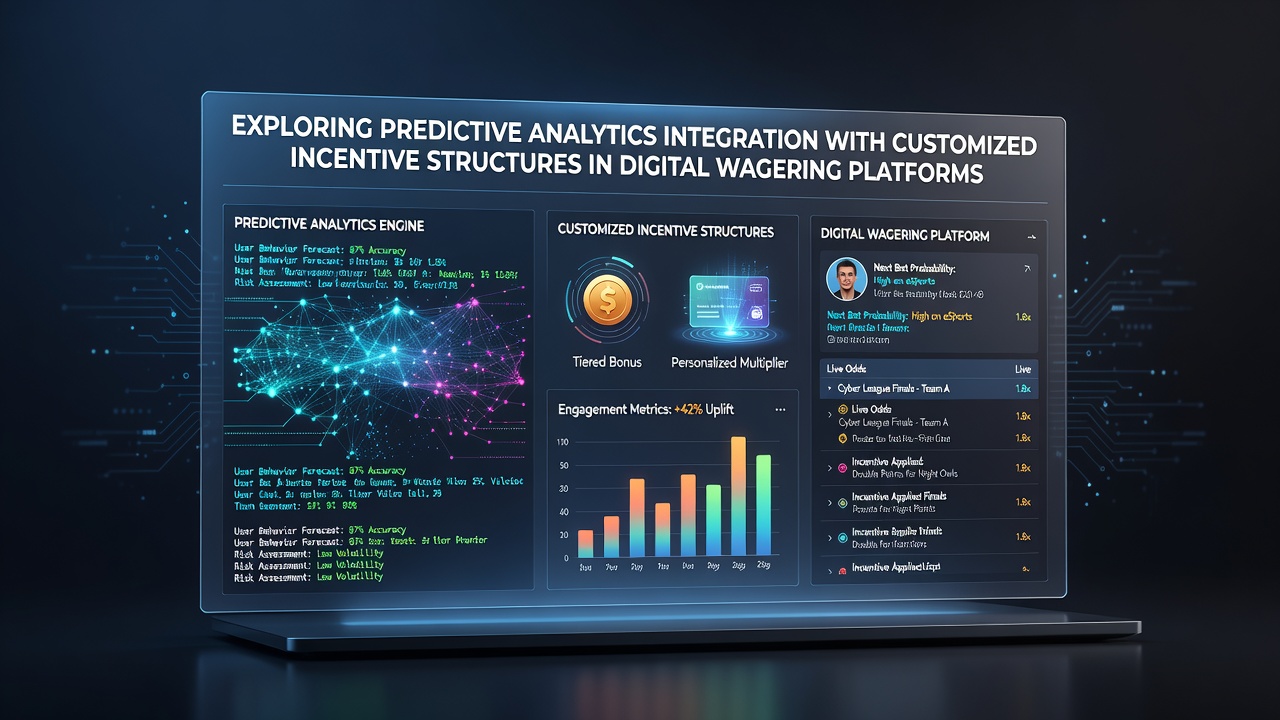
Exploring Predictive Analytics Integration With Customized Incentive Structures in Digital Wagering Platforms
Digital wagering platforms have adopted predictive analytics to refine how they deliver customized incentive structures, and operators track user behavior patterns through machine learning models that process betting histories, session durations, and deposit frequencies. These systems generate targeted promotions such as bonus credits or free spins calibrated to individual risk profiles, and data streams from August 2026 continue to show platforms adjusting incentive parameters in real time based on live performance metrics. Researchers at institutions studying gambling technology note that integration occurs when algorithms identify segments likely to respond to specific reward types, then route offers through mobile apps or account dashboards without manual intervention from marketing teams.
Mechanics of Predictive Models in Wagering Environments
Operators feed historical transaction records and engagement logs into supervised learning frameworks that forecast future activity levels, and these models weigh variables including game preferences, average stake sizes, and churn probability scores to prioritize incentive allocation. Platforms process millions of data points daily through cloud-based pipelines, which allows for rapid recalculation of offer values when new session data arrives. One study from the University of Nevada, Las Vegas tracked how such models improved retention rates by matching reward tiers to predicted lifetime value calculations, and the findings indicated measurable shifts in user participation metrics across tested cohorts.
Designing Customized Incentive Structures
Customized incentives range from tiered loyalty multipliers to time-limited deposit matches that adapt based on user segments, and developers embed rules engines that pull outputs from predictive scores to determine eligibility and magnitude. For example, a high-frequency sports bettor might receive a cashback percentage scaled to recent loss ratios while a casual slots player sees free spin packages aligned with play volume thresholds. Industry reports compiled by the American Gaming Association document how these structures incorporate geographic and demographic filters to comply with regional licensing requirements, and platforms test variations through A/B frameworks before full rollout.

Integration Workflows and Technical Architecture
Integration begins when data lakes consolidate inputs from game servers, payment processors, and customer support tickets into unified profiles that feed both analytics engines and incentive delivery systems, and middleware layers handle the handoff so that predicted scores trigger automated offer generation within milliseconds. Developers use application programming interfaces to connect these components, which ensures that changes in user behavior propagate instantly to the incentive logic without requiring separate database queries. Observers note that successful deployments often include feedback loops where actual redemption rates update the underlying models, creating iterative refinement cycles that operators monitor through centralized dashboards. In August 2026 several major platforms reported upgrades to their real-time scoring pipelines that reduced latency in incentive distribution by integrating edge computing nodes closer to end users.
Regulatory and Compliance Factors
Regulators in multiple jurisdictions require operators to document how predictive systems avoid targeting vulnerable populations, and licensing bodies such as the Nevada Gaming Control Board mandate audit trails that log every incentive decision back to its source algorithm. Platforms maintain separate compliance modules that cross-check offers against responsible gambling flags derived from the same datasets used for personalization, and this dual-purpose architecture helps satisfy reporting obligations while preserving commercial objectives. International frameworks from bodies in Australia and Canada further emphasize transparency in algorithmic decision-making, prompting vendors to publish summary statistics on incentive fairness during periodic reviews.
Observed Outcomes Across Platforms
Performance data collected from live operations shows that integrated systems correlate with higher engagement durations when incentives align closely with predicted preferences, and cross-platform comparisons reveal that operators who synchronize analytics outputs with incentive engines record steadier revenue curves during seasonal fluctuations. Those who have implemented these approaches report fewer manual overrides in campaign management, since automated rules handle the bulk of segmentation tasks. Research papers examining European and North American markets indicate that the volume of personalized offers has grown steadily, supported by advances in data granularity and processing speed.
Conclusion
Predictive analytics continues to shape customized incentive structures within digital wagering environments through interconnected data flows and automated decision layers, and platforms that maintain rigorous testing and regulatory alignment demonstrate consistent operational scaling. As new datasets accumulate through 2026 and beyond, the emphasis remains on refining model accuracy while meeting jurisdictional standards for fairness and transparency.