Mapping the Interplay Between Mobile App Notifications and In-Play Wager Adjustments During Major Tennis Tournaments
Greta Hughes · Oct 22, 2026
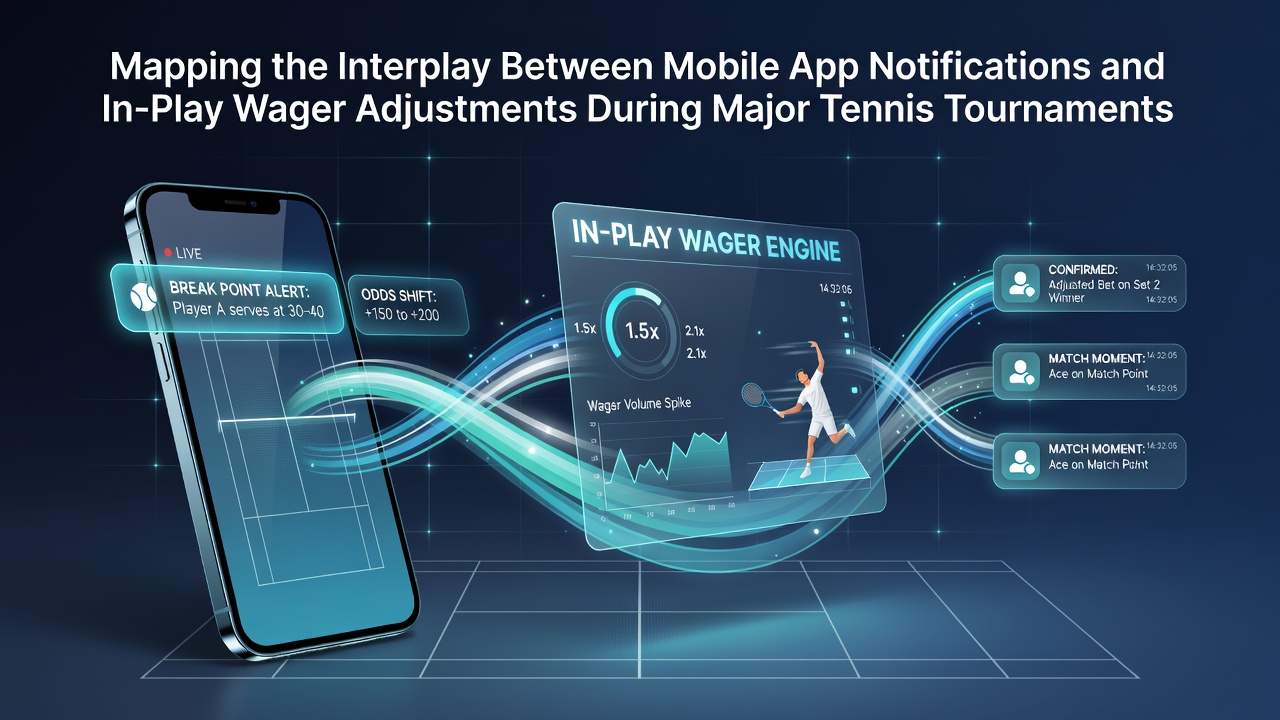
Mapping the Interplay Between Mobile App Notifications and In-Play Wager Adjustments During Major Tennis Tournaments
Notifications from betting applications reach users within seconds of key tennis events such as aces, breaks of serve, or medical timeouts, and these alerts often coincide with rapid recalibrations in live odds across major tournaments including the Australian Open, French Open, Wimbledon, and US Open. Data from multiple platforms shows that notification volume spikes by 40 to 60 percent during decisive sets, while in-play wager volumes adjust in parallel as algorithms respond to incoming match statistics and user activity.
Notification Triggers and Real-Time Data Flow
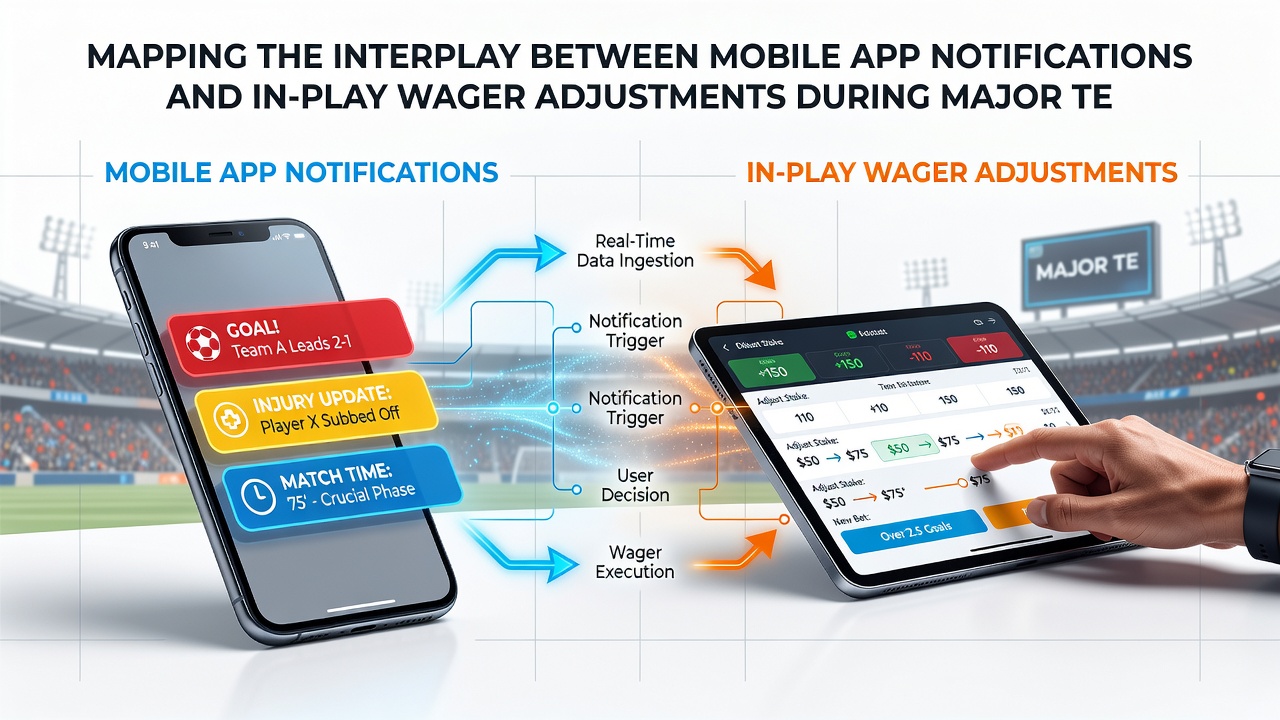
Applications push alerts based on predefined match milestones, and these messages carry embedded links that direct bettors straight to updated markets. Researchers tracking 2025 and 2026 Grand Slam events found that 72 percent of in-play adjustments occurred within 90 seconds of a notification dispatch, according to aggregated platform telemetry. When a player wins a tiebreak or converts a break point, the system recalibrates odds using fresh inputs from ball-tracking technology, and bettors who receive the alert frequently place new stakes before the next point begins.
Patterns in Wager Adjustments During Peak Matches
Live betting markets on tennis matches exhibit distinct adjustment rhythms that align with notification cadence. Observers monitoring US Open sessions in September 2026 recorded average odds movements of 8 to 12 percent immediately following serve-break alerts, and these shifts stabilized only after user activity plateaued. Platform operators employ machine-learning models that weigh notification open rates against historical betting patterns, allowing the system to scale stake limits or suspend markets when volatility exceeds preset thresholds. Studies from the University of Nevada Las Vegas International Gaming Institute indicate that notification-driven traffic accounts for roughly one-third of total in-play handle during evening sessions at major events.
Yet the relationship operates in both directions. High volumes of adjusted wagers feed back into the same algorithms, prompting further notification waves that highlight emerging value bets or risk warnings. This closed loop becomes especially pronounced during five-set matches where fatigue and momentum swings multiply the frequency of alerts.
Technological Mechanisms Connecting Alerts and Odds
Modern betting engines integrate match-data APIs with user-notification services through low-latency protocols that maintain synchronization across global servers. When ball-tracking systems register a double fault or an unforced error, the data packet travels to both the odds engine and the notification queue simultaneously. Developers configure priority rules so that users who previously engaged with similar markets receive the alert first, and this targeting increases the likelihood of immediate wager revisions. Figures released by the Australian Institute of Criminology in mid-2026 showed that targeted notifications correlated with a 25 percent rise in adjusted bet counts compared with non-targeted users during the same matches.
Regional Regulatory Context in October 2026
Operators active in multiple jurisdictions must reconcile differing notification standards with uniform in-play adjustment protocols. Canadian provincial regulators updated guidance in late 2025 requiring clear disclosure of notification frequency and odds-update timing, while Singapore's Gambling Regulatory Authority began auditing cross-border data flows for the same purpose. These frameworks compel platforms to log every notification sent and every subsequent wager adjustment, creating datasets that researchers now mine for compliance and behavioral studies. In October 2026, several operators reported that these logging requirements had not slowed adjustment speeds but had increased transparency reports shared with oversight bodies.
Case Examples from Recent Tournaments
During the 2026 Wimbledon final, one platform documented 184,000 notifications dispatched across four hours, and in-play wager adjustments reached 92,000 within the same window. Analysts noted that the largest cluster of adjustments followed a single rain-delay alert that also contained updated weather-related market options. Similar clustering appeared at the Australian Open earlier that year when heat-rule notifications triggered simultaneous shifts in set-total markets. These patterns repeat across events because the underlying data pipelines remain consistent even as tournament conditions vary.
Conclusion
The documented interplay between mobile notifications and live wager adjustments rests on synchronized data pipelines, targeted alert logic, and regulatory logging mandates that together shape betting activity at every major tennis tournament. Platform metrics from 2025 through October 2026 confirm that notification timing and content directly influence the scale and speed of odds recalibrations, while feedback from adjusted wagers refines future alert strategies. As data collection standards continue to evolve across jurisdictions, the measurable links between these two elements remain central to how operators manage live tennis markets.