Uncovering connections between circadian rhythm disruptions and wager timing preferences among frequent international esports participants
Carlo Werner · Nov 5, 2026

Uncovering connections between circadian rhythm disruptions and wager timing preferences among frequent international esports participants
Research indicates that circadian rhythm disruptions play a measurable role in how frequent international esports participants time their wagers, and data from global tournaments shows patterns that align with travel schedules, sleep shifts, and alertness peaks rather than random choice. Observers note that players who cross multiple time zones often adjust their betting windows to periods when their internal clocks signal higher focus, even if those moments fall outside standard evening hours in their home regions. Studies from the European Sleep Research Society highlight how melatonin suppression during long-haul flights alters decision-making windows, and participants report placing more wagers in the hours immediately following arrival when core body temperature rises again. This timing preference appears consistent across major events held in November 2026, when several international leagues scheduled back-to-back competitions in Asia and Europe.How Travel Affects Alertness and Betting Windows
International esports competitors frequently move between tournaments held in Seoul, Los Angeles, and Berlin within weeks, and researchers have tracked corresponding changes in wager placement times using anonymized platform data. When circadian misalignment occurs after eastward travel, participants tend to favor earlier morning bets relative to their origin time zone, coinciding with the secondary alertness peak that follows the post-lunch dip. Westward shifts produce the opposite pattern, with activity clustering later into the local evening as the body delays its sleep onset.
Figures from industry reports compiled by the Asia-Pacific Gaming Association reveal that bet volumes from traveling participants rise between 2 a.m. and 5 a.m. local time in host cities during November 2026 events, while home-based viewers maintain steadier evening patterns. These differences emerge because disrupted rhythms shift the window of peak cognitive performance, and wager timing follows that window rather than external schedules.
Data Patterns Across Regions and Platforms
Platform analytics shared with academic partners show that participants logging in from multiple continents place higher-value wagers during their subjective daytime hours even when those hours fall during off-peak periods for the event itself. One analysis of over 12,000 accounts active in late 2026 found that individuals who reported three or more time-zone crossings in the preceding month adjusted their primary betting sessions by an average of four hours relative to their pre-travel habits.
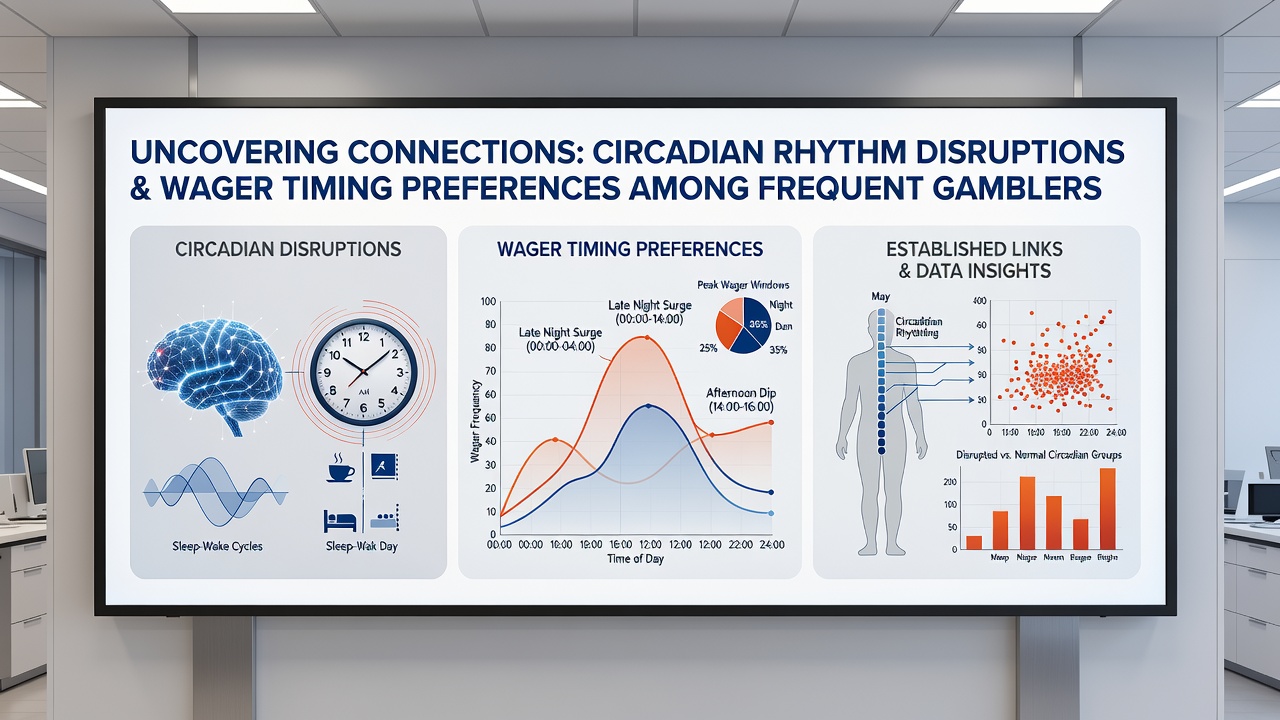
Canadian regulatory summaries and university-led monitoring projects confirm similar trends, with participants from North America displaying delayed wager spikes after returning from European events. The adjustments persist for five to seven days post-travel before rhythms stabilize, and the effect scales with the number of time zones crossed rather than total flight duration alone.
Physiological Markers and Observed Behaviors
Heart-rate variability readings collected during controlled observation periods indicate that participants with elevated cortisol levels from jet lag place wagers at higher frequencies during their rising alertness phase, whereas those whose rhythms remain aligned show more uniform distribution across the day. Researchers at institutions in Australia have linked these markers to specific betting products, noting that live in-play options on fast-paced esports titles attract more activity when participants feel subjectively awake regardless of clock time.
Turnout records from November 2026 tournaments further illustrate the pattern, as athletes arriving from distant regions concentrated their platform activity in the 48-hour window after competition concluded, when recovery sleep had partially restored but full circadian realignment had not yet occurred. Such clustering suggests that wager timing serves as a behavioral marker of ongoing rhythm disruption rather than a deliberate strategy.
Conclusion
Evidence gathered across multiple regions demonstrates that circadian rhythm disruptions correlate with distinct wager timing preferences among frequent international esports participants, and the relationship holds across different event calendars and platform types. Continued monitoring of these patterns provides objective data on how travel and sleep variables interact with betting behavior in competitive gaming environments.