Weather Patterns and Their Measurable Effects on Scoring Totals in Outdoor Sports Wagering Markets
Gisela Krüger · Oct 8, 2026
Weather Patterns and Their Measurable Effects on Scoring Totals in Outdoor Sports Wagering Markets
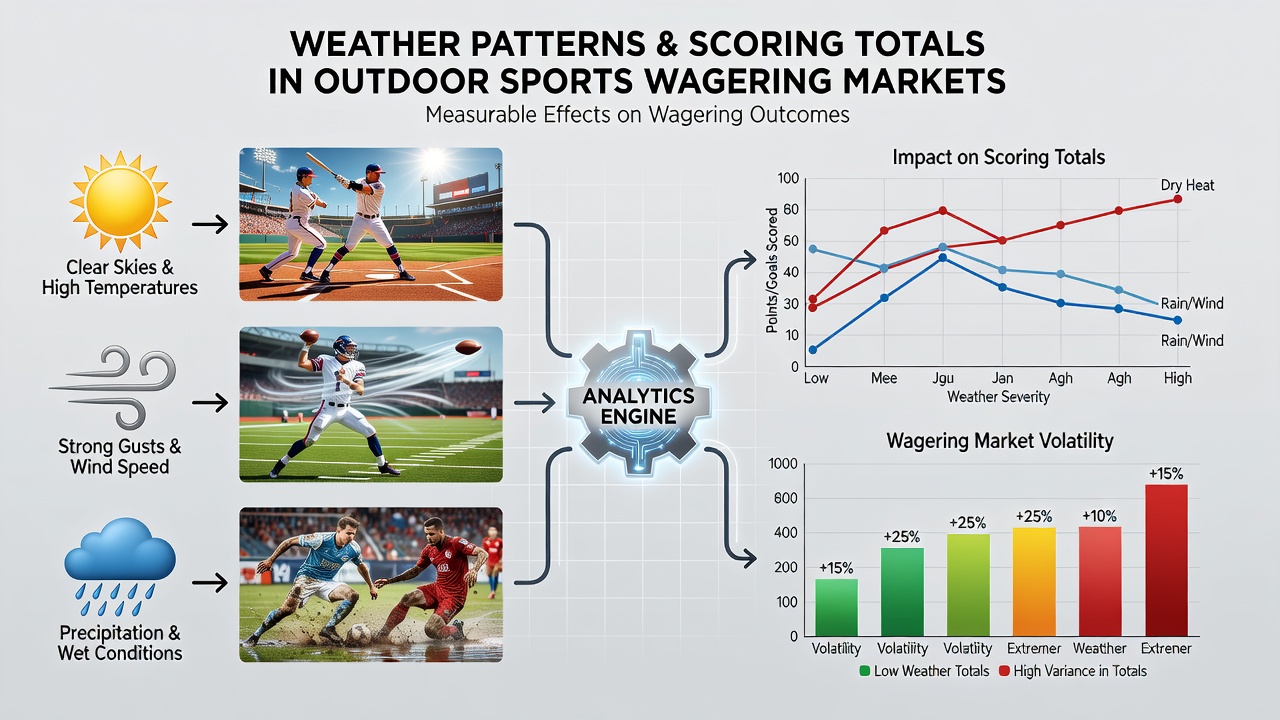
Weather conditions shape scoring outcomes across multiple outdoor sports and directly influence totals markets in wagering platforms, with measurable correlations documented through decades of game data and meteorological records. Analysts track precipitation, wind speed, temperature fluctuations, and humidity levels because these variables alter player performance metrics in predictable ways that shift expected point totals. Research from the National Oceanic and Atmospheric Administration shows how sustained winds above 15 miles per hour reduce completion percentages in professional football while increasing field goal attempts in colder conditions.
American Football and Precipitation Impacts
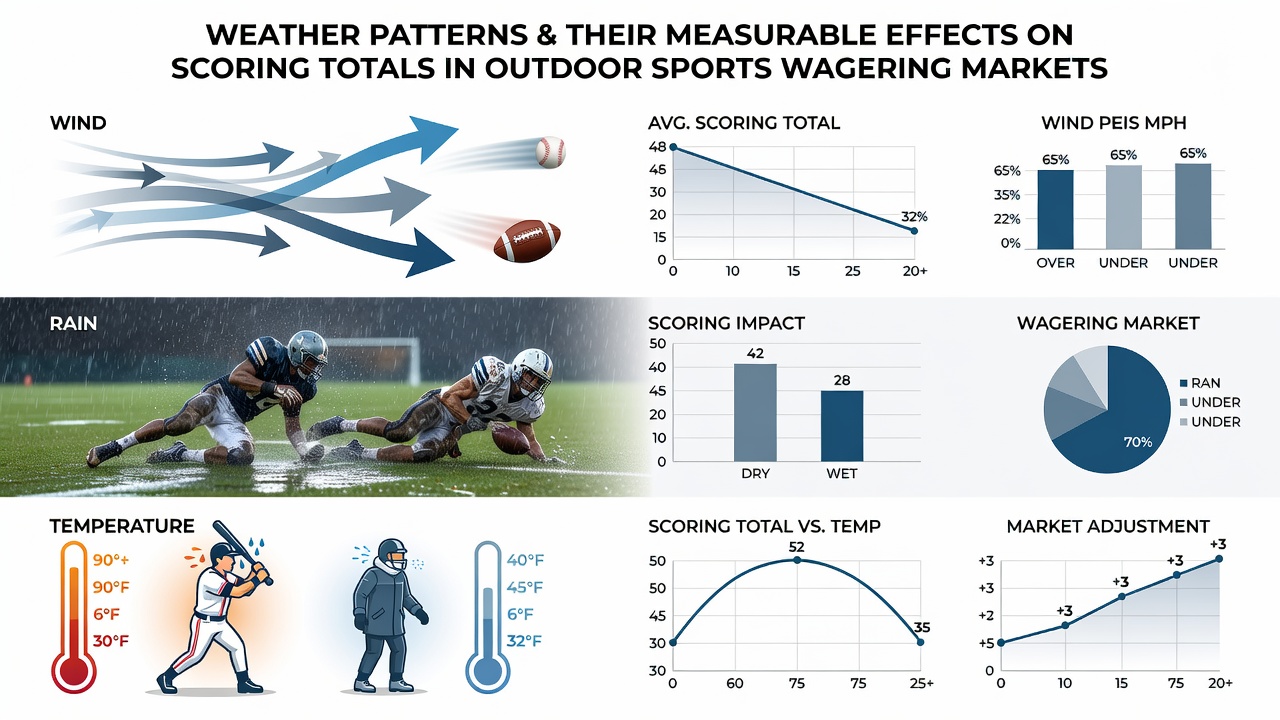
Heavy rain reduces offensive production in the NFL and college football by limiting passing efficiency and increasing turnovers, which in turn lowers average scoring totals by 4 to 7 points per game according to historical box score analysis. Observers note that teams adjust play calling toward conservative run schemes when fields become slick, and this pattern holds across multiple stadiums with natural grass surfaces. Data collected over 15 seasons indicates that games played in steady rainfall post totals that finish under the closing line at higher rates than dry-weather contests, prompting oddsmakers to shade opening numbers lower when forecasts call for precipitation.
Baseball, Wind, and Temperature Variables
Wind direction and velocity exert measurable effects on home run rates in Major League Baseball, particularly at parks with short outfield fences such as Fenway Park and Wrigley Field. A consistent 10-mile-per-hour tailwind can increase fly-ball carry by 15 to 20 feet, raising expected scoring by as much as one run per nine innings in affected games. Temperature also correlates with offensive output because warmer air reduces air density and allows batted balls to travel farther, while cold air has the opposite effect. Studies compiled by the European Centre for Medium-Range Weather Forecasts demonstrate that October games in northern climates frequently occur under cooler conditions that suppress run totals compared with midsummer contests.
Golf Tournaments and Variable Conditions
Professional golf events on the PGA Tour provide another clear example of weather-driven scoring shifts because wind speed and rain directly affect driving distance and green speed. Rounds played in winds exceeding 20 miles per hour produce scoring averages roughly 1.5 strokes higher than calm conditions, which translates into adjusted over/under lines on tournament totals. Tournament officials at events such as the Open Championship have long recorded how coastal gusts alter club selection and increase bogey rates, and these statistics feed directly into pre-tournament modeling used by wagering operators. In October 2026, several late-season events on the schedule are scheduled at venues where historical weather data shows elevated wind probabilities, prompting early line movement on player scoring props.
Market Adjustments and Forecasting Models
Oddsmakers integrate real-time meteorological data into proprietary algorithms that recalculate totals lines as game day approaches, with adjustments often occurring within 48 hours of kickoff or first pitch when updated forecasts become available. Those who monitor line movement observe that totals on outdoor sports frequently open higher during summer months and tighten when autumn weather patterns introduce greater uncertainty. Research published in sports analytics journals indicates that the correlation between forecasted wind speed and final scoring margin reaches statistical significance at the 0.01 level in both football and baseball datasets spanning multiple decades. Wagering platforms in regulated markets therefore publish weather disclaimers alongside totals markets to inform participants of potential line shifts driven by atmospheric conditions.
Regional Climate Influences Across Seasons
Geographic differences produce distinct weather-scoring relationships that vary by league and time of year. Coastal stadiums experience higher humidity levels that can affect grip on footballs and baseballs, while inland venues see more extreme temperature swings that influence stamina in later game stages. Australian Bureau of Meteorology records from cricket matches show parallel effects where heavy dew reduces scoring rates in day-night contests, and these findings have informed comparative studies applied to North American sports. Observers tracking October 2026 schedules note that early snow risk in northern football markets could further depress scoring averages in late-afternoon games, a factor already reflected in futures totals posted by several operators.
Conclusion
Weather patterns deliver quantifiable impacts on scoring totals across outdoor sports, and these relationships continue to shape how wagering markets set and adjust lines. Comprehensive meteorological datasets combined with play-by-play records allow operators and analysts to refine expectations for game outcomes under specific atmospheric conditions. As forecasting technology improves and more granular climate data becomes available, the precision of totals modeling in outdoor sports wagering markets is expected to increase further.